Street Food Culture in Mexico

After a little break, I’m back here writing about street food culture in Mexico. As I was living in Mexico last spring, I saw that street food has a big role in Mexico’s culture. There are street food stands all around the cities. Food brings people together from all backgrounds.

For this blog post, I interviewed some Mexicans from different backgrounds such as a Mexican cook, students, and people that were born in Mexico but live elsewhere nowadays. I wanted to hear what the street food culture means for them and all the Mexicans. I asked them a few questions about the street food culture such as what makes it important for the people, how’s the hygiene, are there places where they wouldn’t buy anything, and what are the most common street foods. It was super interesting to read all the answers and I’m hyped to share it all with you guys.
Mexicans cannot even imagine a city or town without street food. It’s deeply rooted in their culture. For Mexicans, street food is like a network that connects all the people together, no matter where they come from. Food is a common language that they all share. In Mexico you can find yourself enjoying a plate of food and a community you feel you belong to. You might hope to see people you know at the food stands and share news, talk and make jokes with them.

When visiting a new place in Mexico, one of the things you should do is to visit a local food market. The food tells a story about the place, what are the customs of its people, how they think etc. Even though the most popular street foods such as tacos, tortas, tamales, elotes, quesadillas, enchiladas, and tostadas are mainly made the same way, there are still regional differences and specialties. Trying out the regional specialties you get to know the place and its local customs better.
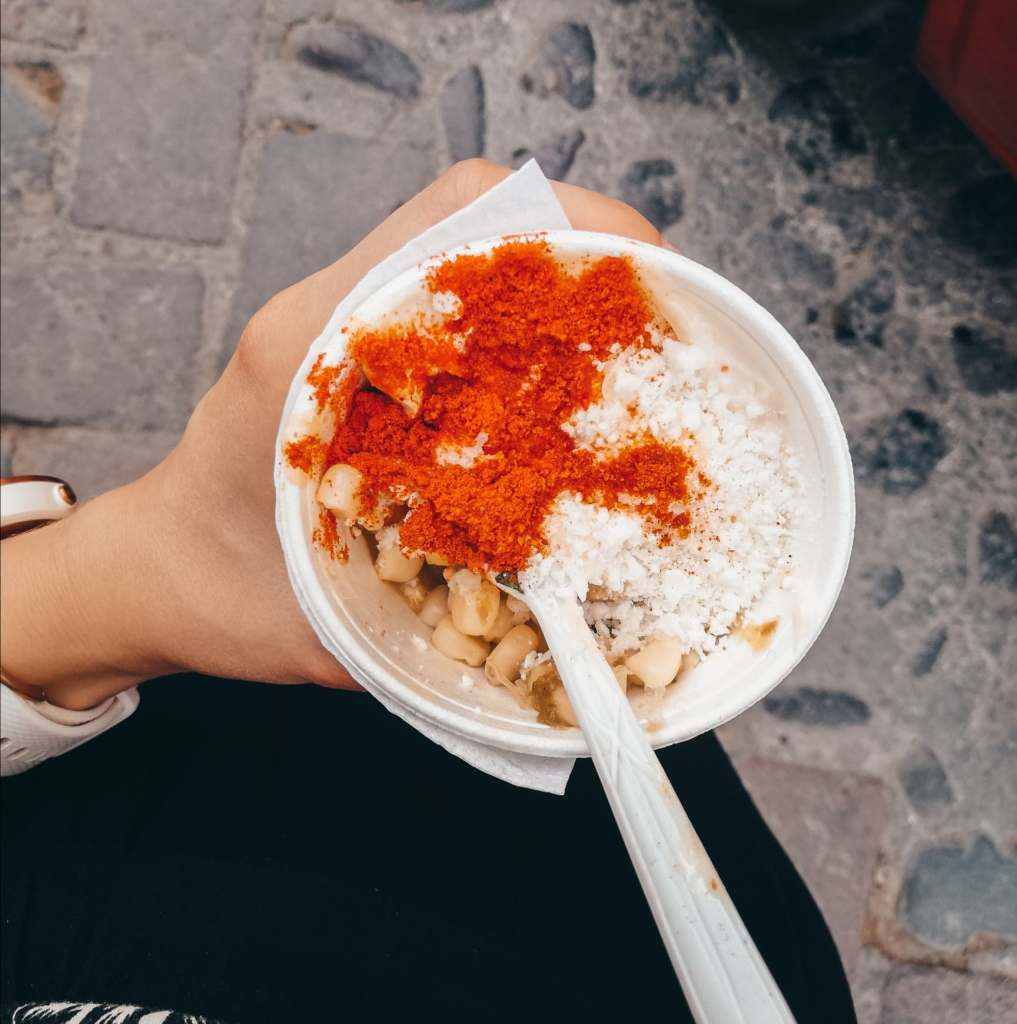
Esquites

Many of the street food stands are family-owned that has been passed from generations to generations. The food stands are not just a business for them but also a tradition and a way of life. The same recipes are passed for new family members and the whole families dedicate their daily lives to the process of preparing the food and sharing the joy of delicious food to others. With time some stands get popularity among the society and they become the places you preferably go to satisfy some particular appetite.

The street food culture is important for Mexicans but also for the economy. Many Mexicans wouldn’t have the money to pay rent for a place where they sell food at so selling the food on the streets make their businesses possible. Also, some people couldn’t afford to eat in restaurants so they get their food from the street stands. It’s a winning situation for both, the businesses and the customers. Buying food in the streets is part of Mexicans daily routine, they could not imagine their life without it. It’s the way how people socialize.
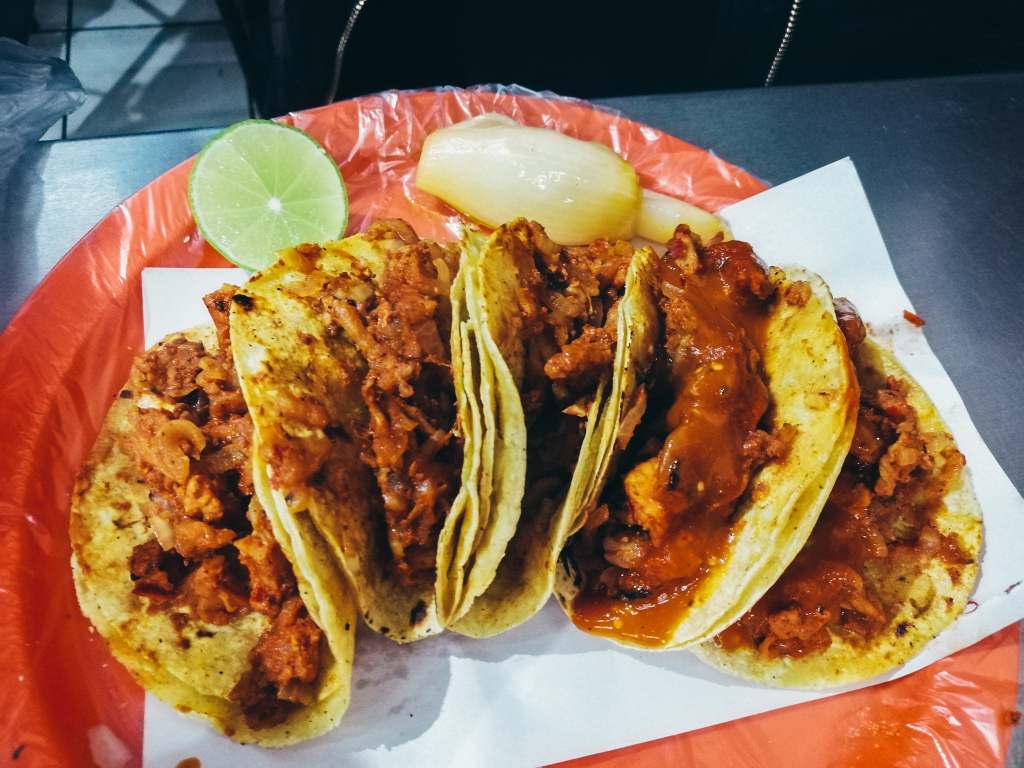
Meat tacos (here you can see how the plates are covered with plastic)
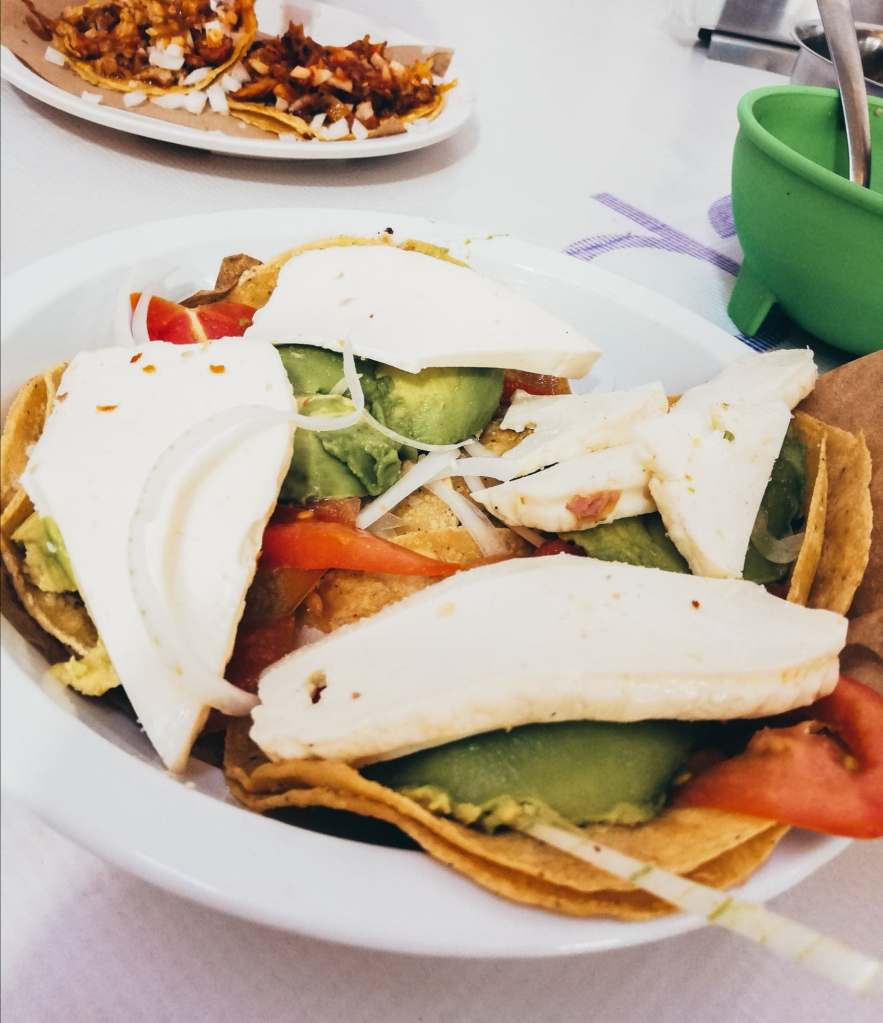
Vegetarian tacos filled with white onion, tomato, avocado and cheese.

The hygiene on the stands cannot be compared to the hygiene standards for example in Europe but in most places, it’s still fine. For foreigners, it might seem that the stands don’t have good hygiene but the locals think it’s okay. Of course, there are some stands that are not so clean but those stands are not popular among people. Usually, the stands where you can see many people enjoying and eating their food are clean and safe places to eat. When ordering food at the stand or a restaurant, the plates are often covered with a plastic bag (see the picture above with meat tacos). I visited one of these places where that was the case and stupidly just thought that the plate was new and I was supposed to take the plastic bag away when starting to eat. Luckily I was there with my Mexican friends and they told me to keep the plastic on the plate because the restaurant doesn’t clean the plates, just cover with new plastic bags. So that’s their way to keep the plates clean. Well, we got a good laugh at it :D.
Usually, a good tip when traveling to Mexico is to wait for 2-3 weeks before buying food on the streets. During this time you and your stomach will get used to the new climate and the food so you wouldn’t get food poisoning or any sicknesses from the stands. Also, you should always check the hygiene on the stands and see if the stand is clean and it’s safe to buy food from there. Another thing you should avoid, especially in the beginning is buying fresh fruits on the streets. You might think that those are safe to eat but the problem with those is that how are the fruits washed, are they washed with clean bottled water or not? If not, there’s a chance to get ill.
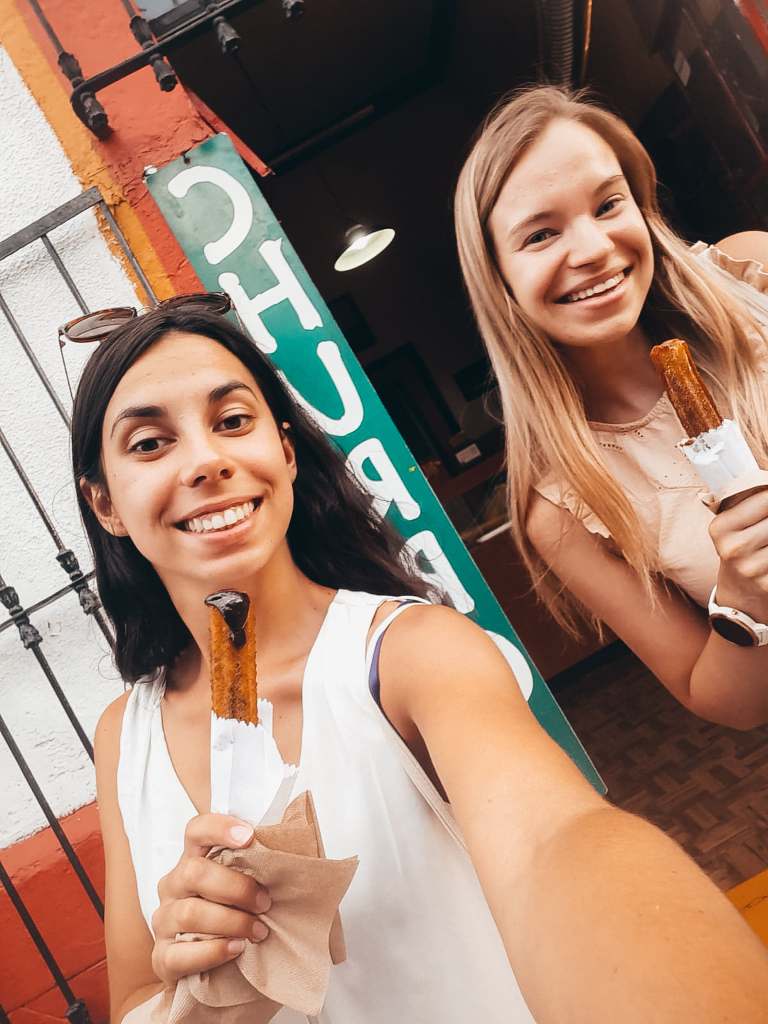
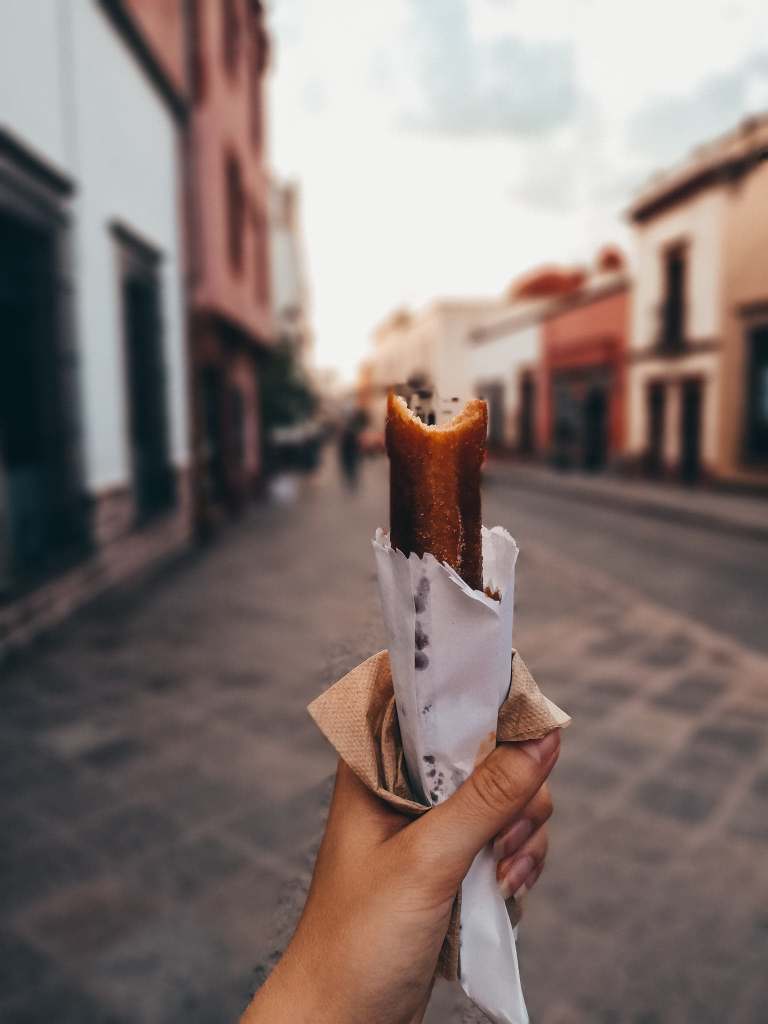
Churros ❤

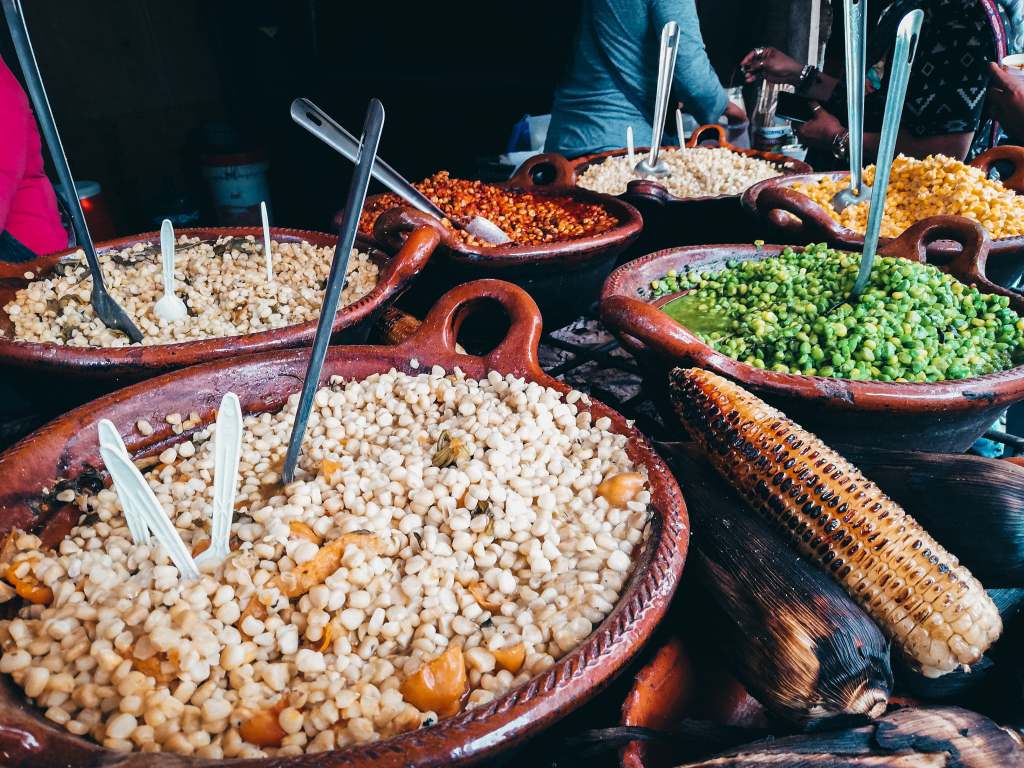
Some of my favorite street foods I tried in Mexico were tacos, esquites, and churros. Tacos are a perfect snack any time of the day and you can eat them as many as you want depending on your hunger. Esquites are “corn in a cup” with seasoning, mayo, chili powder, and cheese. It’s similar to elote which is made with the same ingredients but the corn is in a stick. And then there are churros… always a good choice when you are craving something sweet. In Mexico the churros are often filled with some sweet sauce, my favorite is churros with caramel. Ahh, I really miss all the Mexican food!

Now it’s your turn. Tell me in the comment box what is your favorite street food. I’m excited to read your opinions. Also, I would love to hear some feedback on my new banner and the layout. How do you like it? Do you like it more than the previous one? I felt like I wanted to make it more simple this time. Looking forward to your comments! 🙂

Love, Emilia

PS. If you didn’t know, I’m writing this blog as part of my thesis so getting all the comments and having conversations with you mean A LOT to me. It’s part of the way how I will analyze my work and success. So I’m very grateful for all the comments and conversations that I have with you ❤
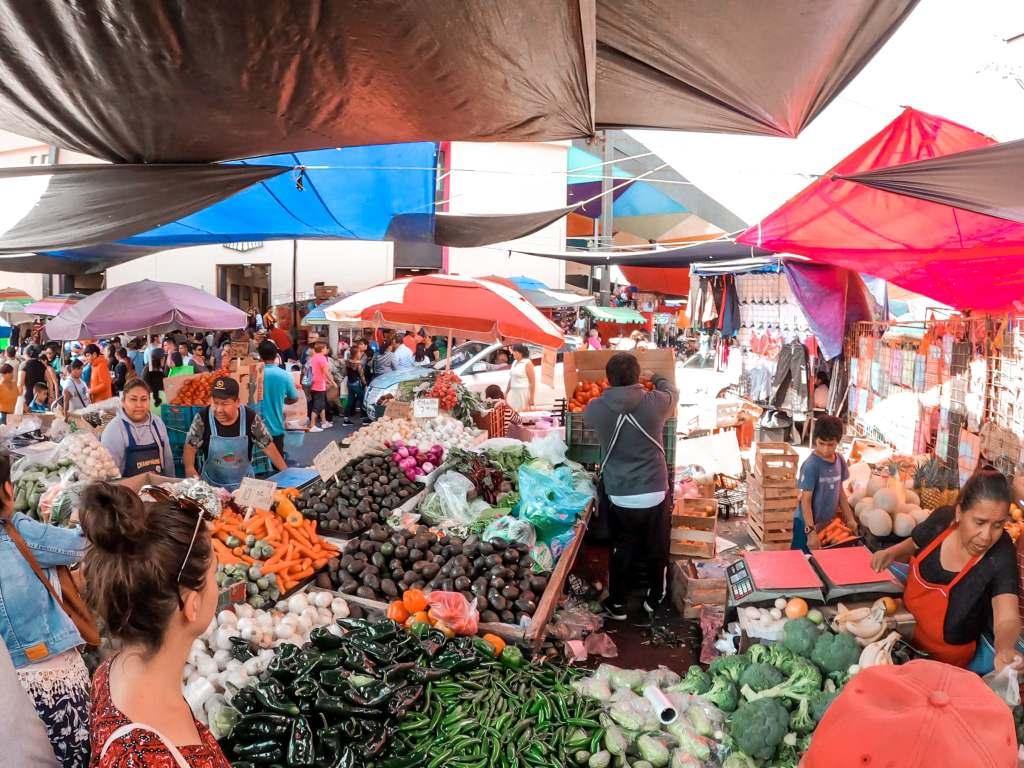
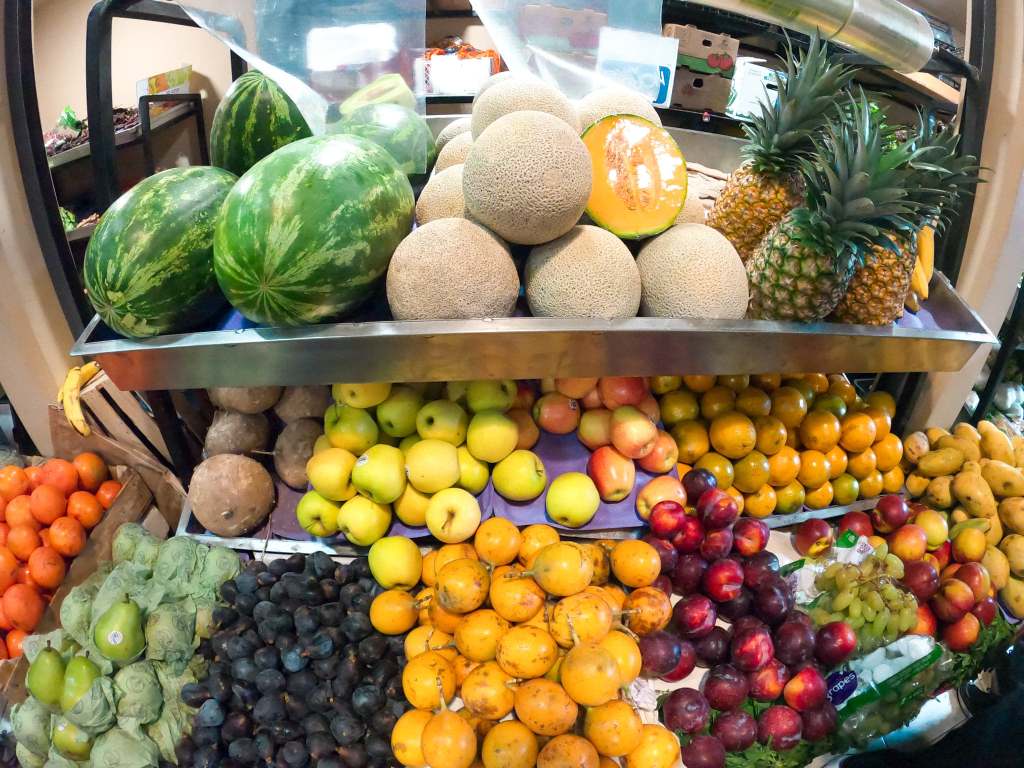
Food markets

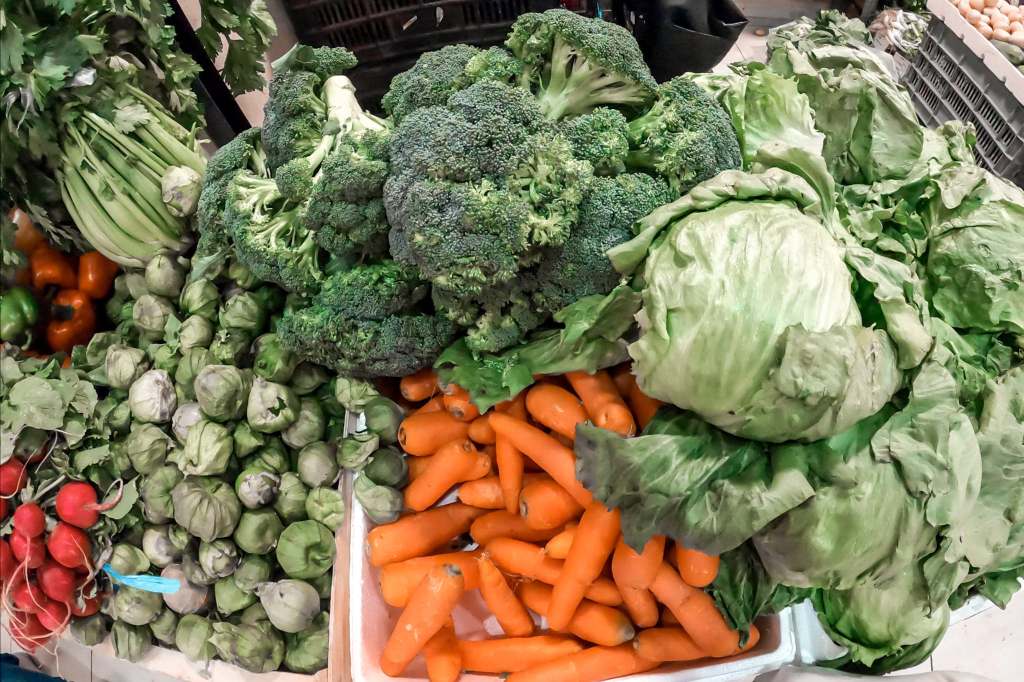
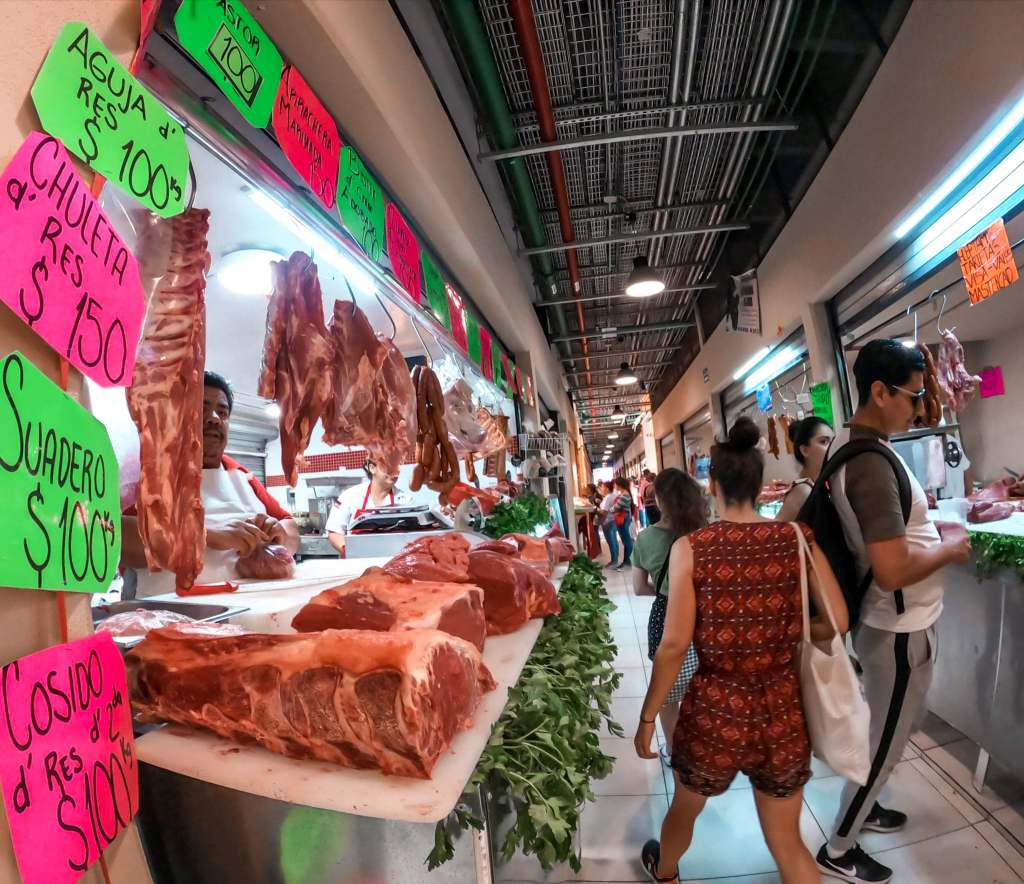
Markets in Mexico have a huge impact on the Mexican food culture. That’s the place where local farmers sell their products and earn their income. For Mexicans, a popular thing to do on Sundays is to go to a market. Sunday is a family day for most families. They go to a market, buy fresh veggies, fruits and meat from the local farmers for the whole week. Depending on the time of the day the families go to the market, they’ll often have either breakfast or lunch there after buying the food. This is a way for them to enjoy some family time together.

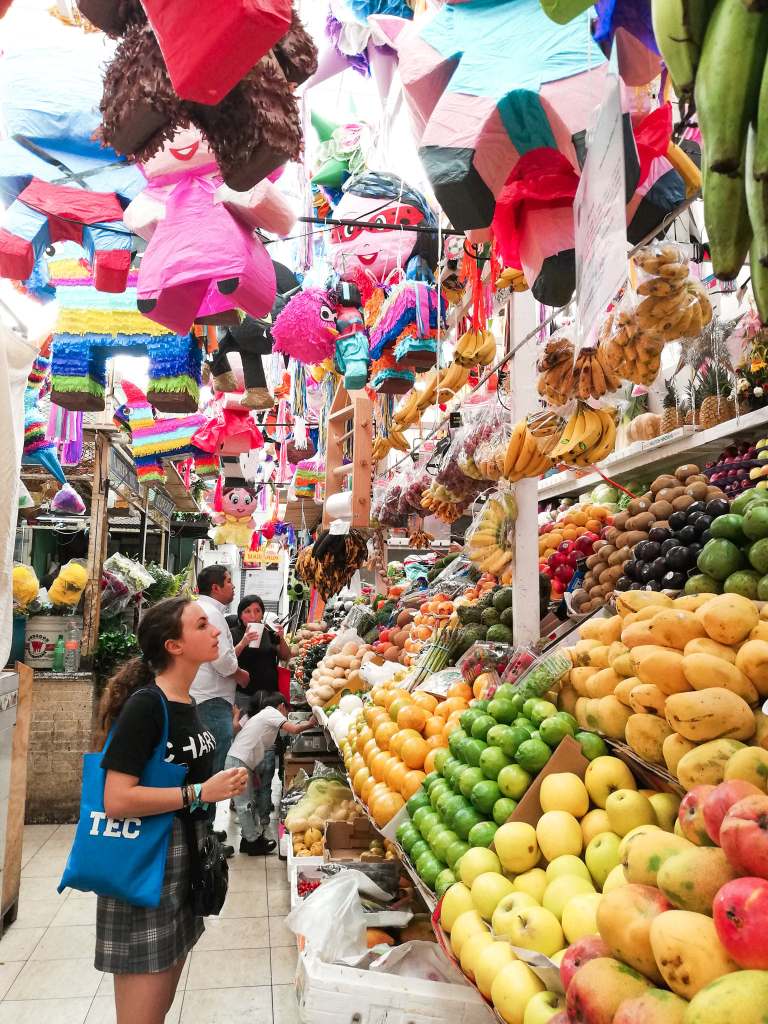
Mercado Benito Juárez, Querétaro

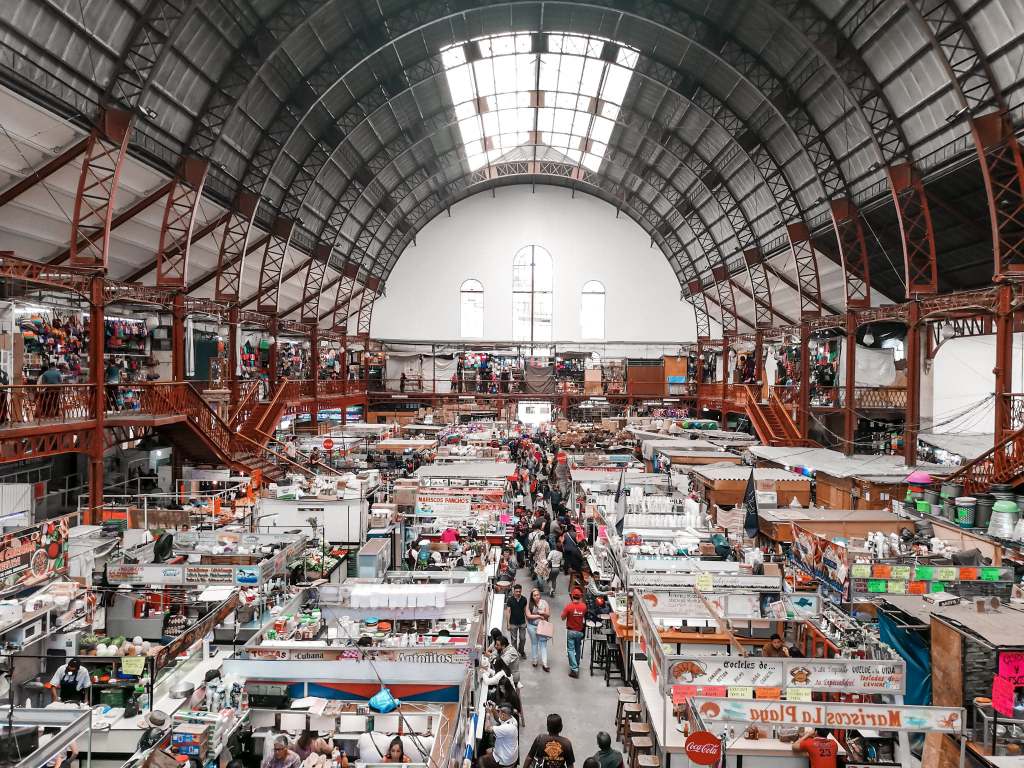
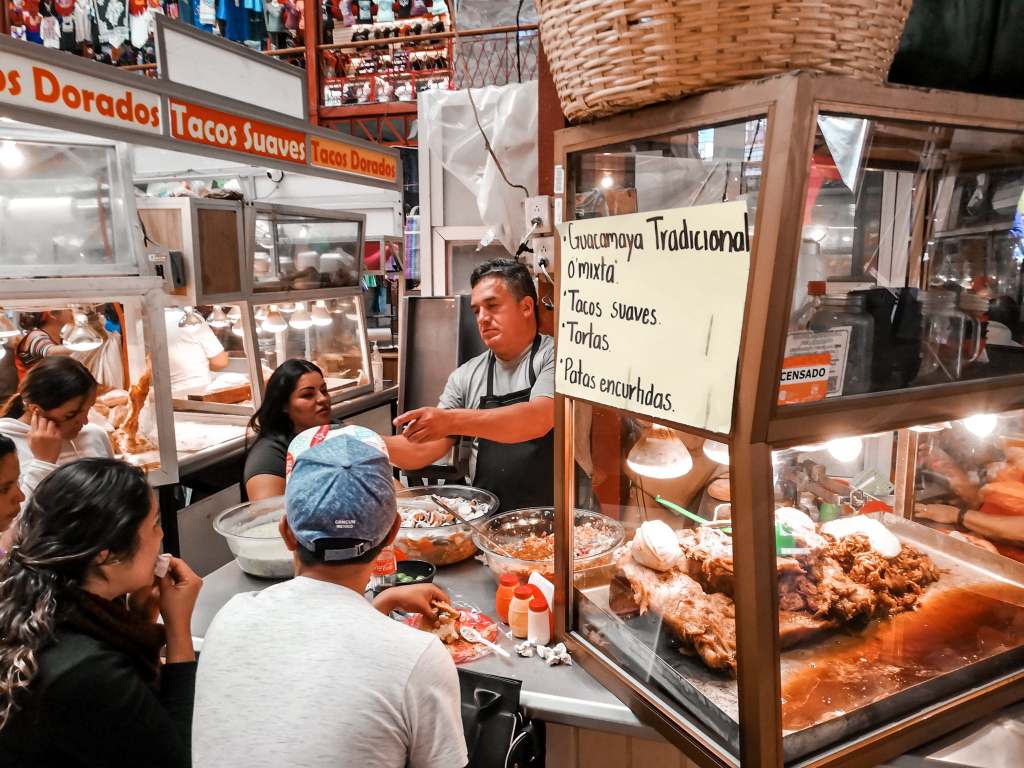
Usually, the food markets have two different areas; outside area and inside area. The inside area is like a big hall full of little stands where they sell veggies, fruits and meat. Also often in the indoor halls, piñatas are hanging from the roof. So while walking inside the market hall and looking up, you will see many different colorful creatures hanging down on the roof. In the Mexican culture, piñatas are a tradition for kids’ birthday parties. During a birthday party, piñata full of candies will be hung on a tree outside in the garden, or inside the house on the roof and the birthday boy/girl will be smashing the piñata blindfolded. After the piñata breaks, all the candies will fall on the ground and the kids will race each other to get the most candies to themselves.

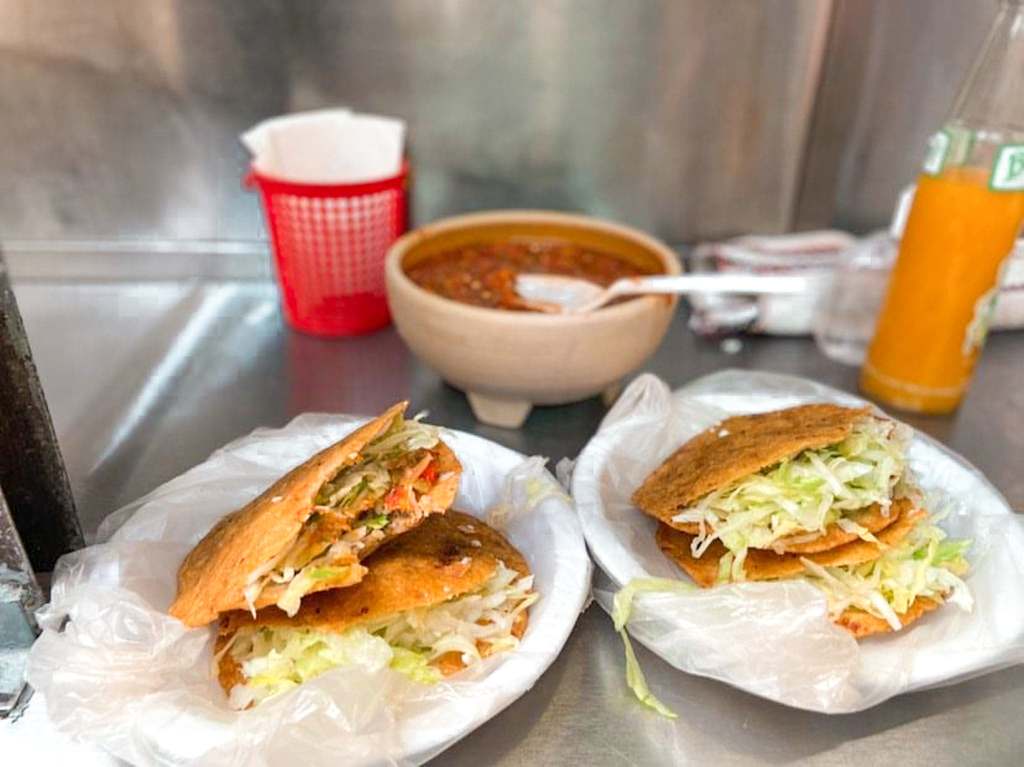
In the outside area, there are many food stands. For example, you can buy gorditas at the market. Gorditas are small thick tortillas, which are cut and filled inside. They are delicious, so be sure to try them out when visiting a food market in Mexico.

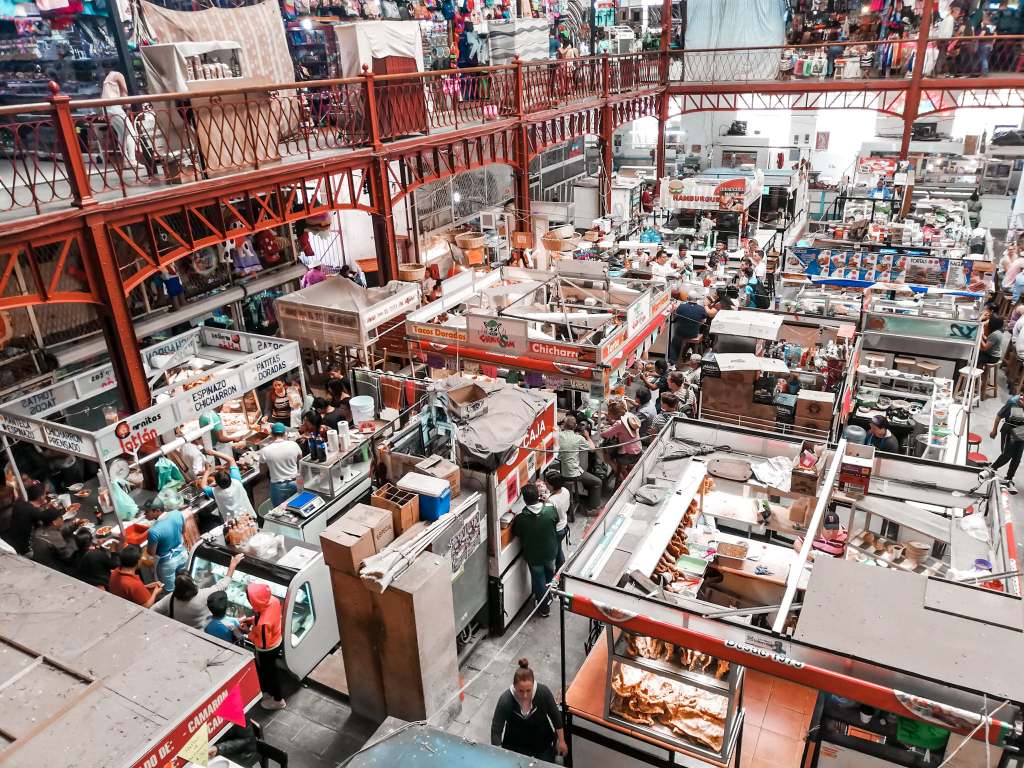
Mercado Hidalgo, Guanajuato
Mercado Benito Juárez, Queretaro
Mercado “La Cruz”, Querétaro
Gorditas

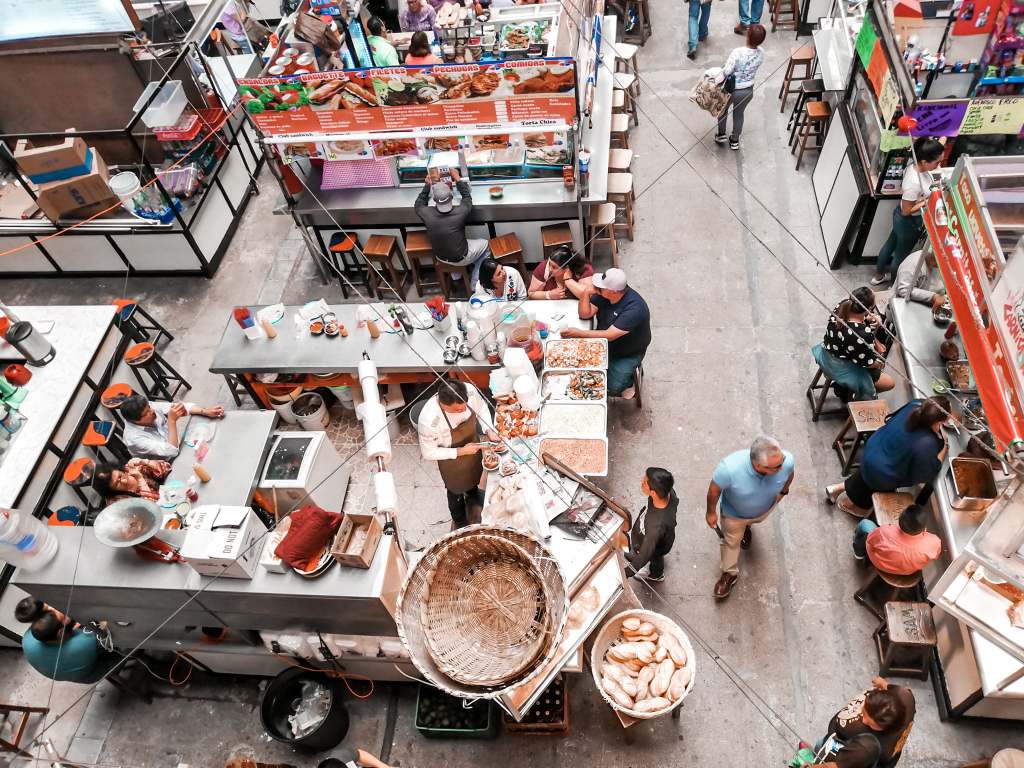
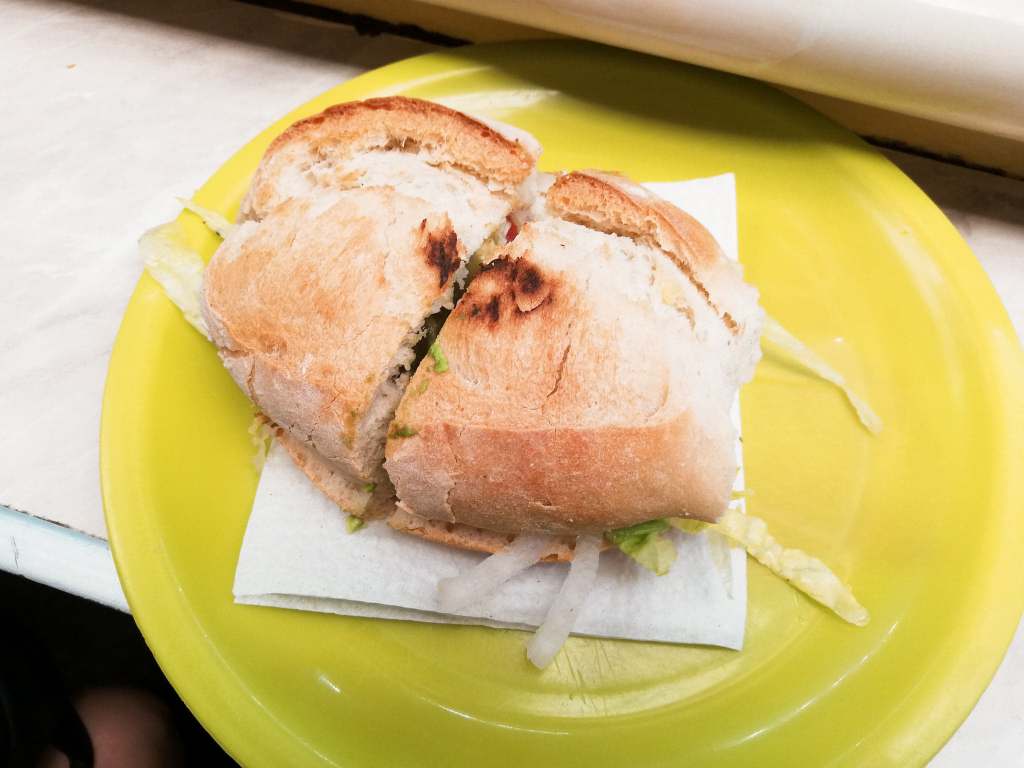
One thing that really jumped into my mind about the markets, is hygiene. Being used to the hygienic standards in my home country, Finland, Mexico is not even close to them. All the food are prepared openly. The market I visited in Guanajuato, was in two floors; the main floor downstairs with all the food stands and a second floor with souvenir stands “around the food stands”. But as the second floor was around the food stands, and the food stands were without any roof on top of them, anyone could throw or drop something from upstairs to the food. Even though people are probably not doing so (at least I hope), it still made me feel a bit uncomfortable eating there. I felt like I wanted to eat something “safe” and I found a food stand that had some cover on top of the food, so I ended up eating there and having a torta. I’m also not sure how they take care of their hand hygiene, as the stands don’t seem to have water taps where they could wash their hands. If there are any Mexican readers, lighten me up in the comment box, please.

Mercado Hidalgo, Guanajuato
Torta filled with onions, lettuce, avocado and tomatoes

I’ve only visited few food markets in Querétaro and Guanajuato which are probably nothing compared to the ones in e.g. Mexico City. But the ones I visited were all a bit different from each other. And by that I mean, the one in Querétaro had the piñatas hanging on the top and the other one in Querétaro didn’t and was more of a “Sunday market” type. The streets close to the main market hall were also full of people selling fruits and veggies but also other things, like dishes, plants and street food. The market in Guanajuato (the big, open hall in the photos) was more full of street food stands than fruit and veggies, but also had a few stands of selling those.

In my opinion, it’s very interesting to see food markets in different cities or areas. Markets in different parts of the country have different food specialties. Gorditas are the speciality in Querétaro region. Unfortunately, I wasn’t able to explore more this time, because of the whole situation in the world. But I hope to visit many more food markets in Mexico soon. I’m eager to learn more about the culture around it and taste the different specialties.

Let me know in the comments what are your thought about Mexican food markets, and what you found interesting in this article.

Love, Emilia

Recipe: Mexican tortillas

Like I already mentioned in my previous post, tortillas are the base of almost every Mexican dish. Tortillas are eaten for breakfast, lunch, snack and dinner. It’s kind of like bread for Mexicans, even though they do eat bread as well but not as much as tortillas. You can always find tortillas in a Mexican’s fridge. I thought it would be a good idea to share a recipe with you all, so if you’re interested, you can make tortillas the Mexican way too. Something to do during quarantine. 😉

A few days ago, I was lucky enough to learn how to make tortillas the Mexican way; from the scratch. I made the tortillas with my Mexican host family, which was a great experience. To learn more about the local food culture, it’s the best to cook together with the locals. One thing in my bucket list for Mexico was to learn to make tortillas, and I’m super excited to share the recipe with you. Surprisingly, it’s very easy to make them, you only need three ingredients: corn flour, water and salt.

Recipe:
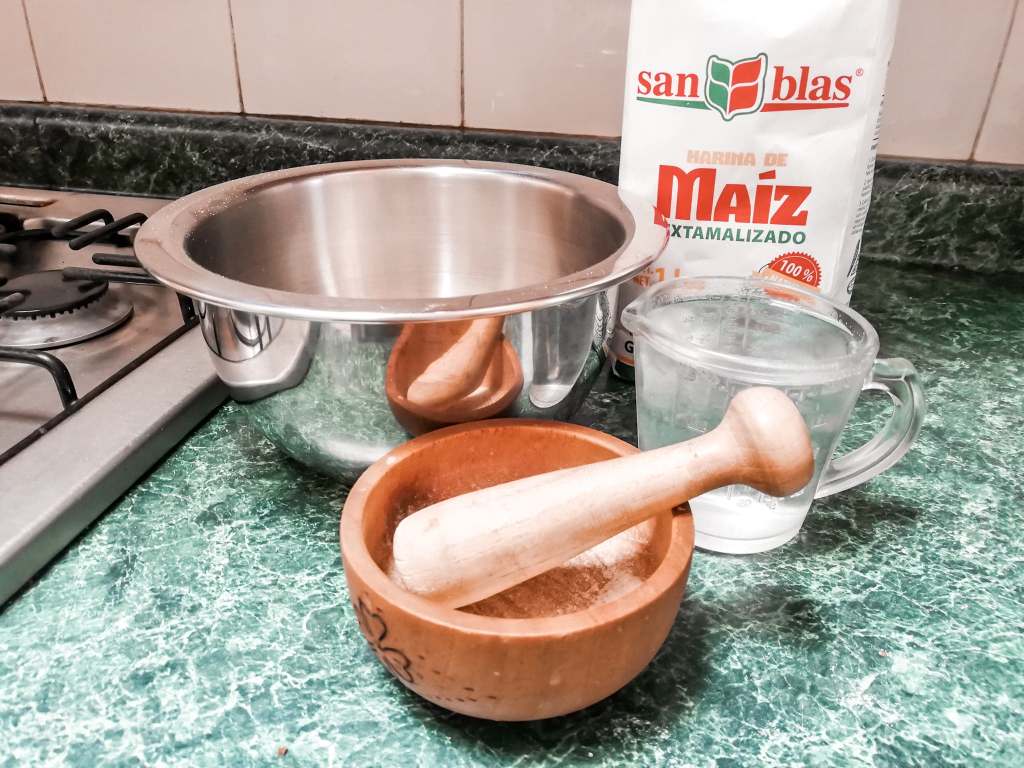
2 cups of corn flour
1 1/4 cups water (lukewarm)
1 tsp salt

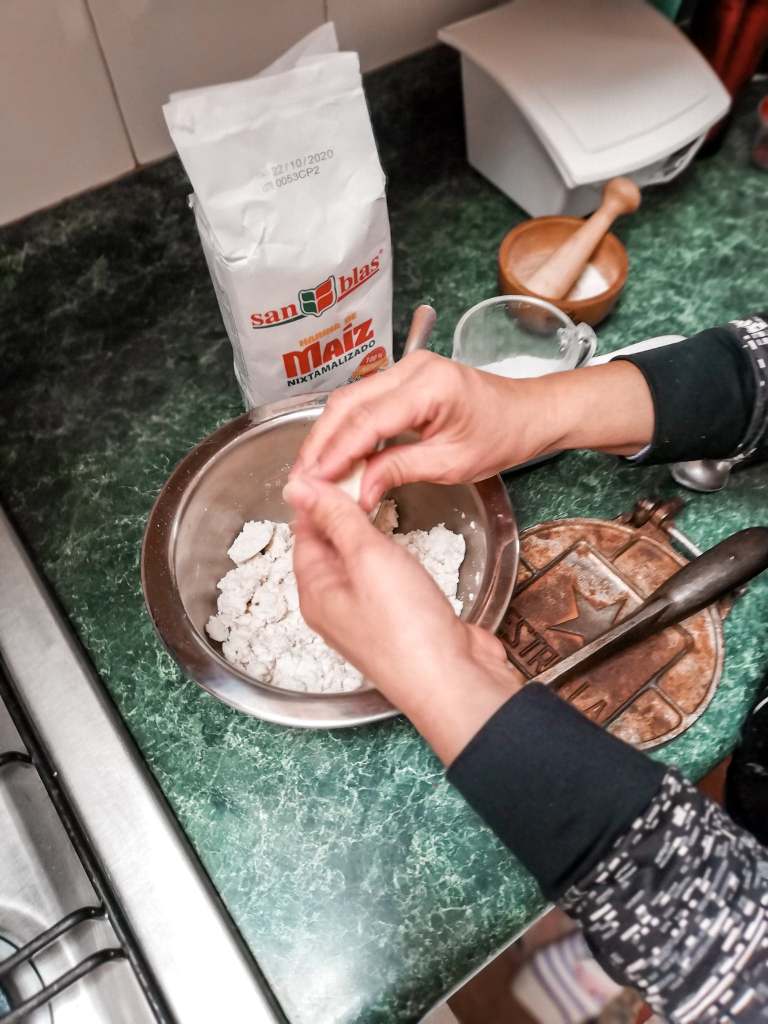
1. Mix all the ingredients together.
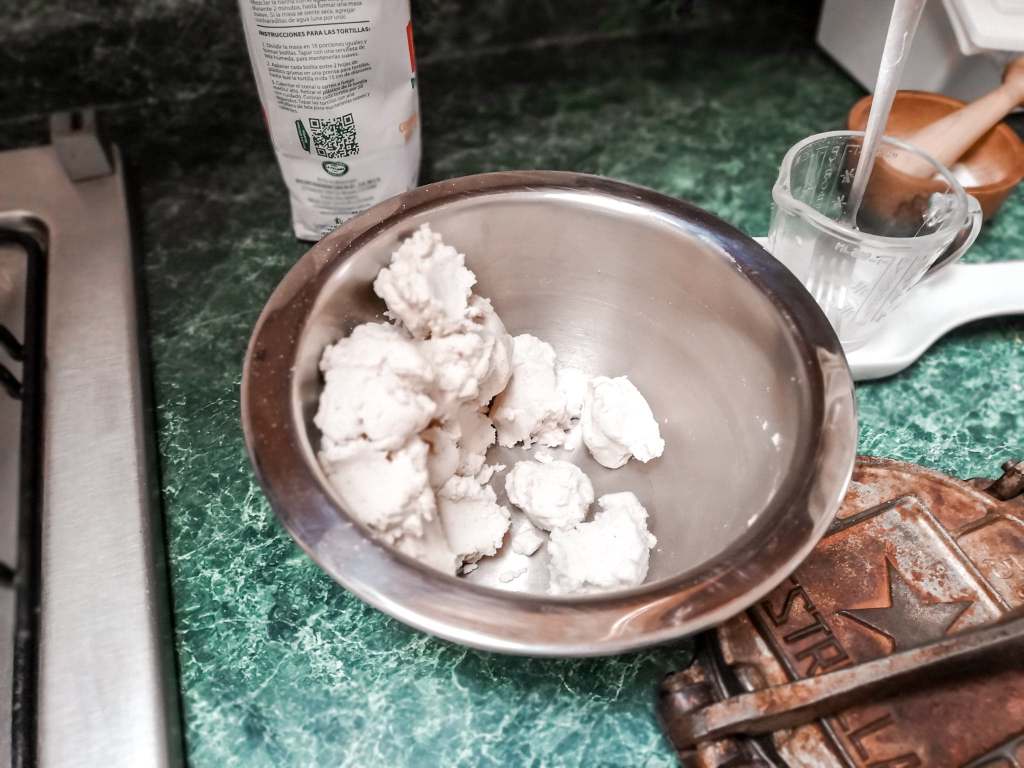
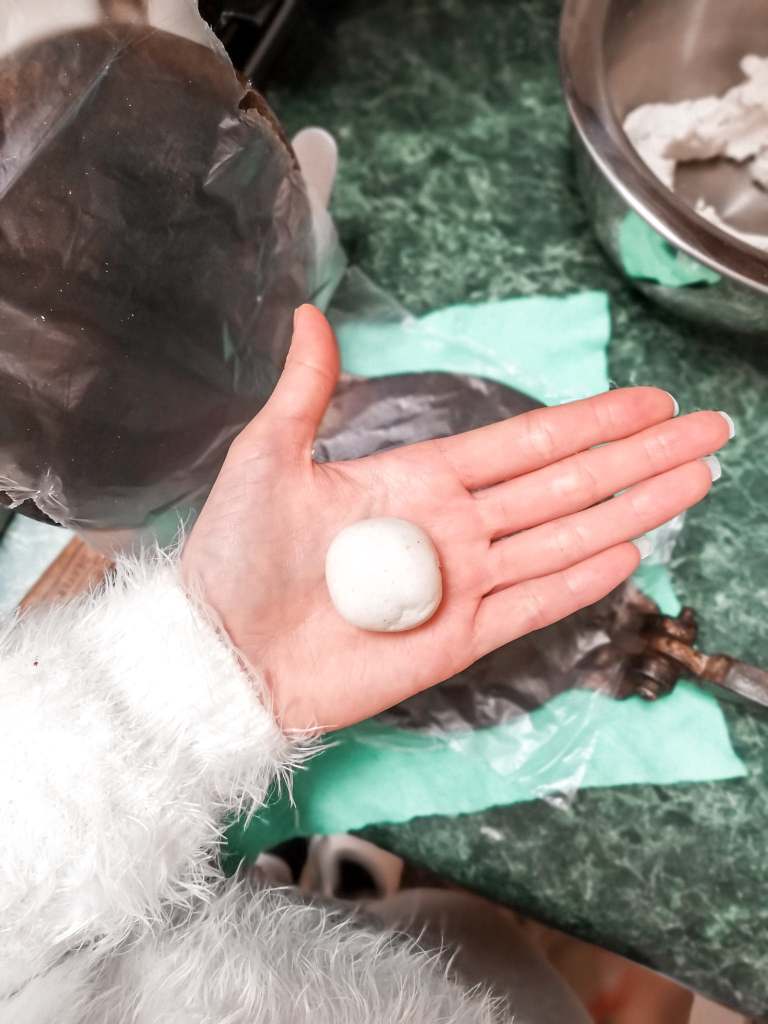
2. Use your fingers to make little balls from the dough.
3. Divide the dough into 16 same size pieces.
4. Make the pieces round with your hands.
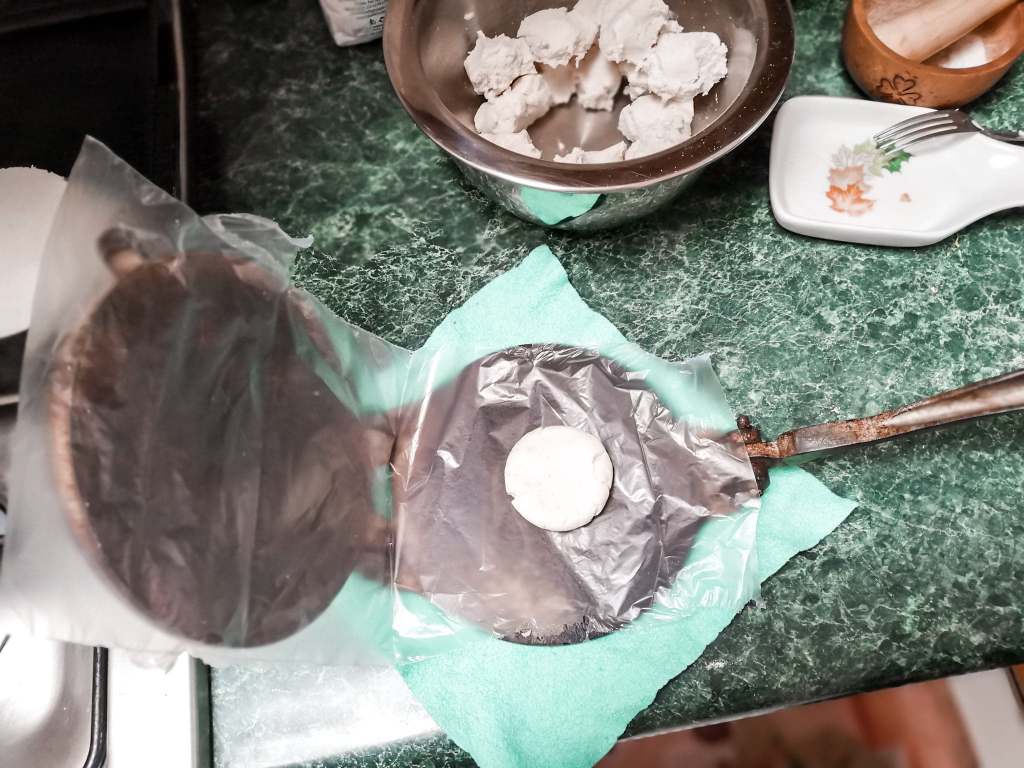
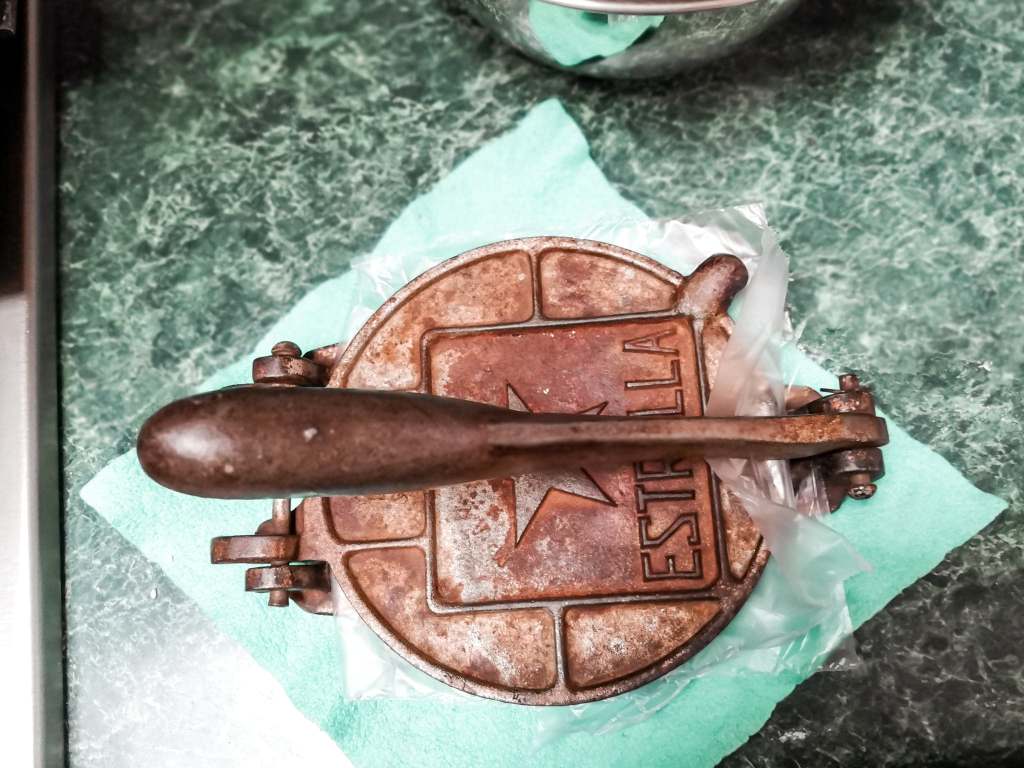
5. Put plastic on the “tortilla maker” and place one of the round pieces in the middle. (This step can also be made with only the plastic and a rolling pin).
6. Make the dough flat. (without the “tortilla maker” just place something on the top of the ball e.g. a chopping board and press the dough flat. Finish with a rolling pin).
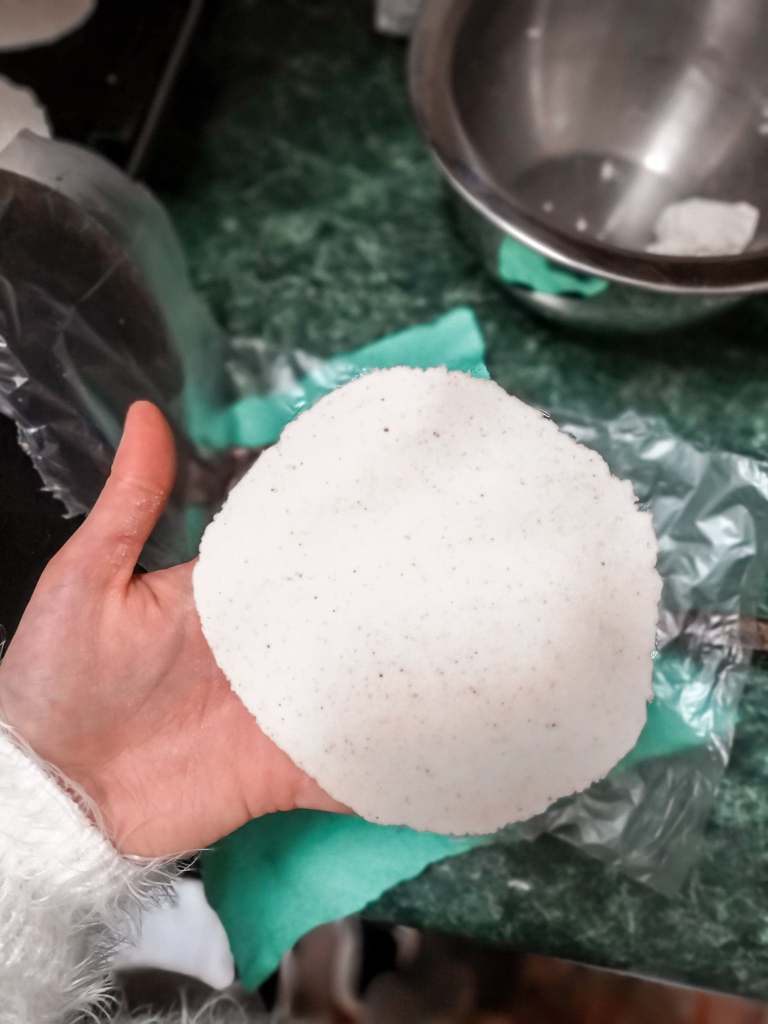
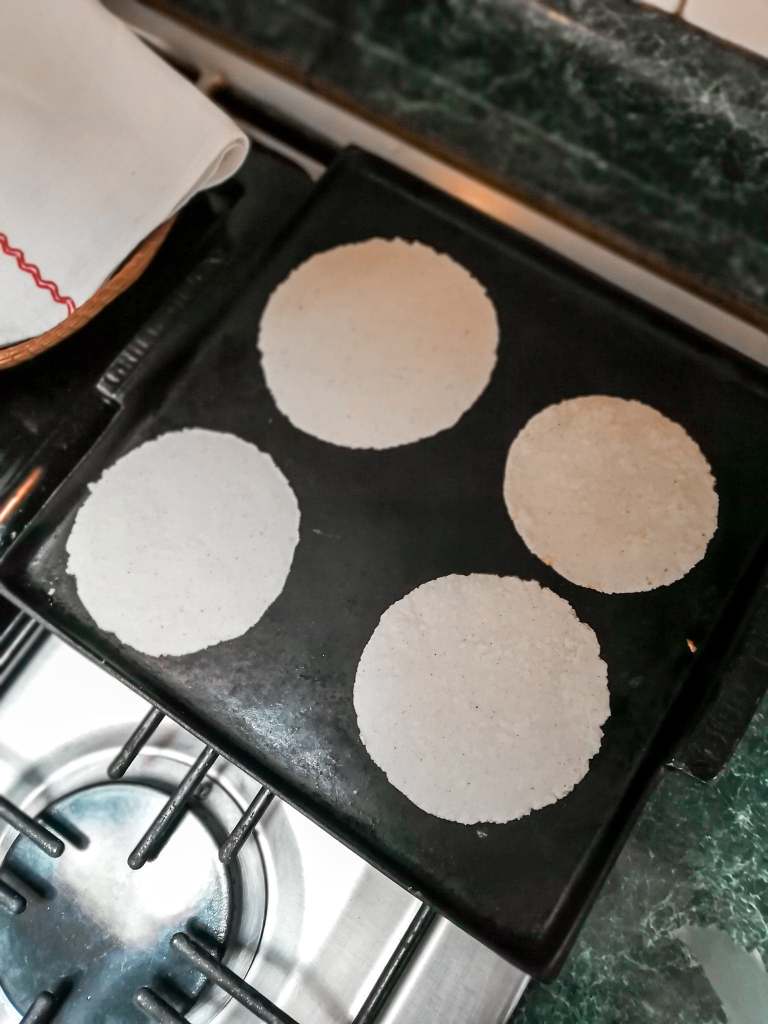
This is what the flat dough is supposed to look like.
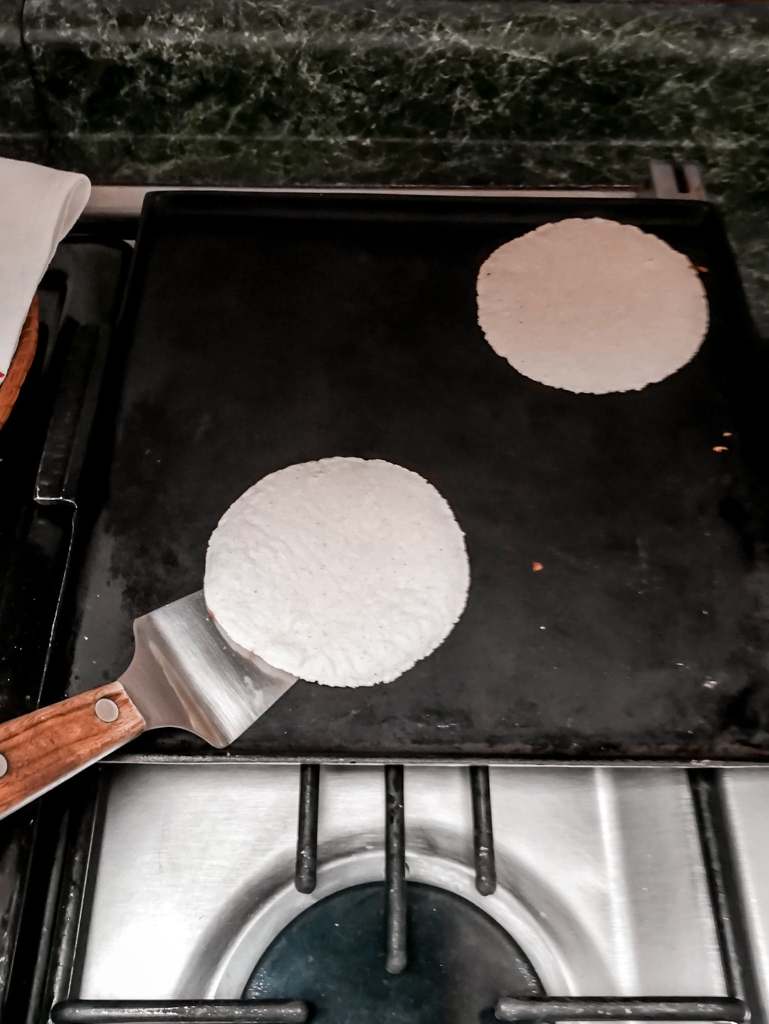
7. Place the pieces on stove and cook them through.
8. Turn them around when the bottom has cooked well (remember you don’t want to make them crispy, just have them cooked but soft).
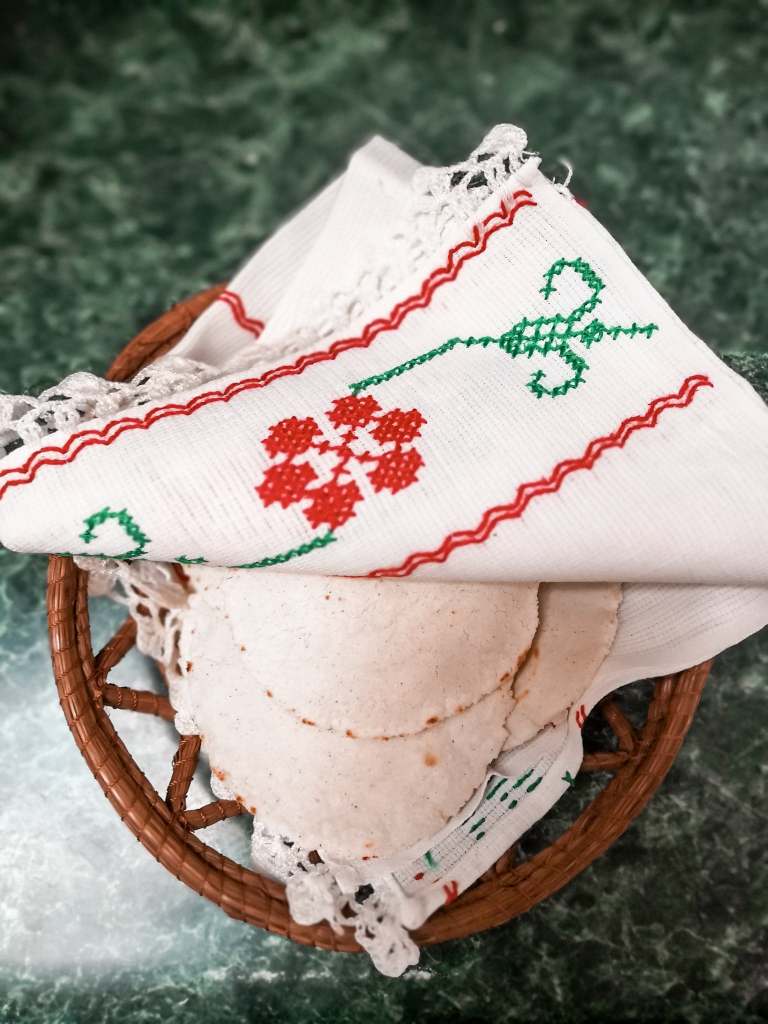
9. After cooked from both sides, place them in a basket and cover with a kitchen towel to keep them soft and warm.
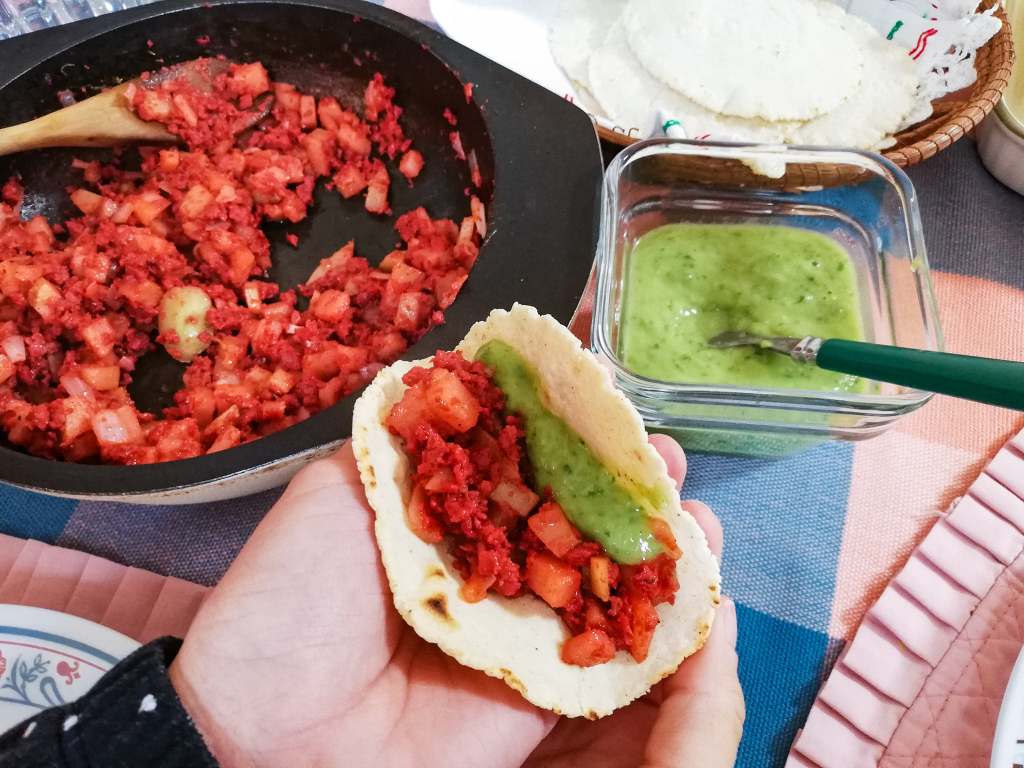
10. To make tacos, serve with fillings of your choice. Our fillings were papas con chorizo and guacamole sauce. We made the papas con chorizo by cooking onion, vegan chorizo and potatoes in a pan together, seasoned with some chili, salt and pepper.
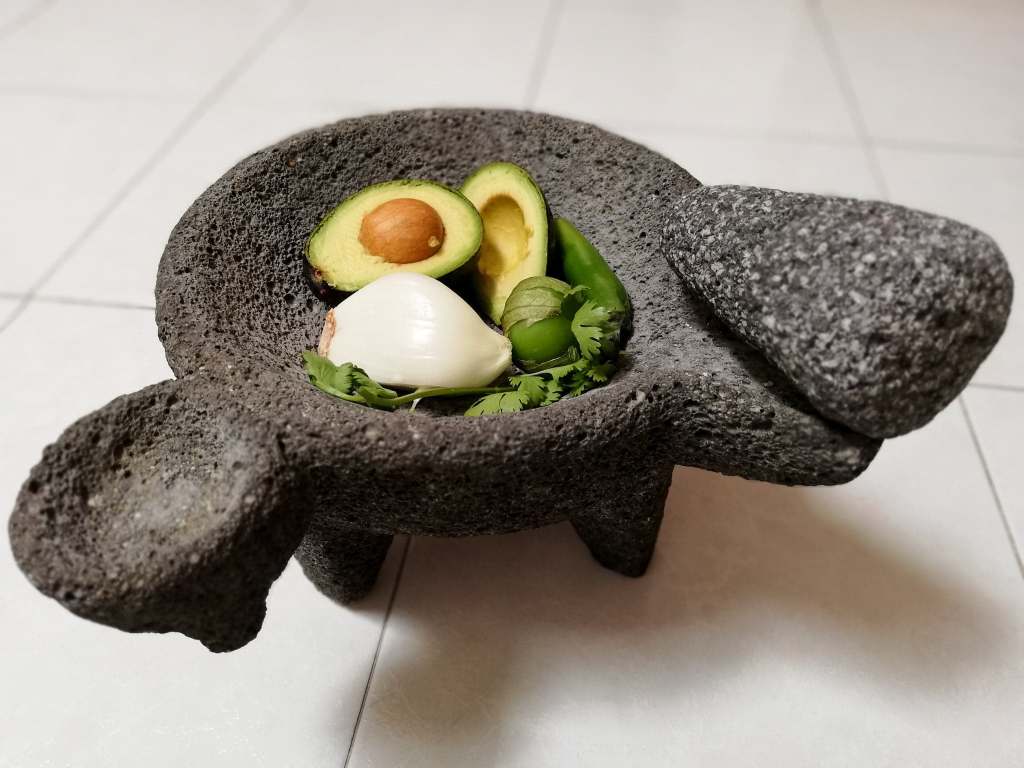
Guacamole was made with avocados, green chili, tomatillo, onion and koriander smashed all together, and seasoned with salt, pepper, lime and a few drops of olive oil.

I hope you all enjoy making tortillas and have fun with it. I would love to know if you plan to make these, so please add a comment and let me know if you do. Also let me know what’s your favorite taco filling. Let’s continue the discussion in the comment box below! Stay safe and healthy!

Love, Emilia

Introduction to Mexican food culture

When thinking about Mexican food often the first things to come in mind are tortillas, tacos and burritos, right? Well it’s true, because those ones are the most commonly known outside of Mexico. But the thing that people usually don’t know, is that Mexican food in Mexico taste and looks totally different than from the ones you get e.g. in Europe.

When I first came to Mexico and tasted the Mexican tacos, for me it looked like I am eating a mini tortilla. As in Europe, or at least in Finland where I come from, tacos are the ones made of corn with a hard cover. But in Mexico the cover is soft and looks and tastes like tortilla, it is just a smaller version of it. I have learned that the plane corn “pancake” is called tortilla and it’s used in different ways in different dishes. Tortillas that are filled are called tacos, tortillas with sauce on top are called enchiladas and tortillas which are filled and rolled are called burritos. So in Mexico, tortilla is the base of most of the dishes. Also, nachos are made of tortillas that are cut in triangles and fried or cooked in the oven to make it hard and crispy.

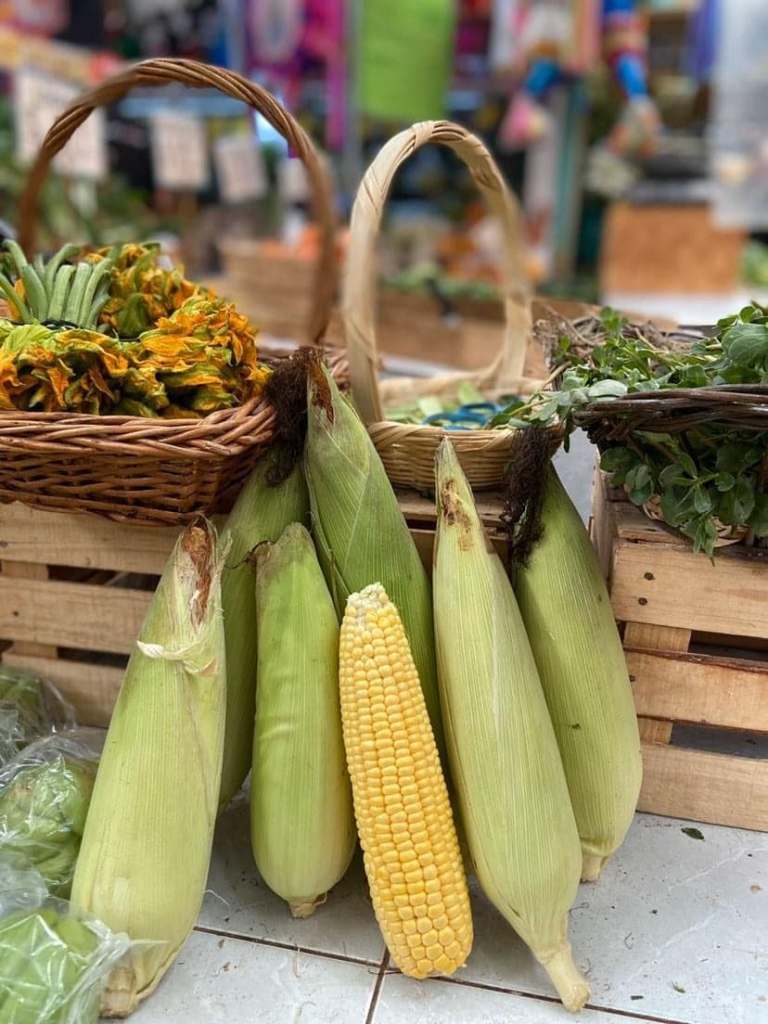
When I read books and studied about Mexican food culture, it was said that corn is the most important and appreciated ingredient in Mexican kitchen. But it’s accurate as tortillas are made of corn and like I said earlier, tortillas are the base of almost all of the Mexican dishes. Other common ingredients used in Mexican cuisine are chili, tomatoes, tomatillos (green tomatoes), squash, avocado, mango, papaya and nopales (cactus). Also meat as pork and chicken are used in most of the dishes, so for vegetarians it’s fairly hard to find food especially when eating out in restaurants. And now I should probably mention that I’m vegetarian or vegan always as possible (not often possible when dining out) so you’re going to see mostly the vegetarian way of eating in Mexico. Sometimes I try to include some meat dishes (if my friends order them for themselves), especially when dining out so you get a better picture of all the foods.

In the upcoming posts I’ll be deepening my knowledge in different topics about Mexican food, for example writing about grocery stores, markets, eating out, street food, festive food, drinking culture, giving some recipes etc. I would also love to hear about what kind of topics you’d like to read in this blog. So, please comment below your ideas! Also, I would like to know what’s your favorite Mexican food, so please write that below too. I’m looking forward to continuing the discussion in the comment box.

Love, Emilia